
One of the more frequently asked questions we receive is whether Reflection Park allows memorial stones and, if so, what they look like. Understandably, some may assume that because we avoid various practices of conventional cemeteries such as grave vaults, embalming, and metal caskets, we may forgo memorial markers too. Other people know of conservation burial grounds that do not use memorial stones in order to minimize disturbance of the natural landscape.
At Reflection Park we do, in fact, have memorial markers. We believe that maintaining an easily locatable physical identifier of a loved one's resting place inscribed with their name is an important part of the healing journey after loss. At the same time, we strive to maintain an uninterrupted feel of the natural environment. As a result, Reflection Park's memorial markers are small, naturally shaped stones that sit flush with the ground at the head of each grave.
At the time of burial, we install a temporary slate marker that remains in place for several months following the burial as the grave mound settles. We don't rush to flatten the ground to its pre-burial look, but rather, we allow the mound of earth over a grave to settle naturally and organically. We see this as the loved one’s footprint leaving the earth slowly and gently.
Our temporary markers are thin slate discs bearing the person’s name and dates of birth and death, set on a bed of pea gravel. They remain until the permanent marker is installed, which we began recently. The photos below show what our memorial markers look like. Both temporary and permanent markers are made of laser-engraved pieces of slate set on a bed of pea gravel. The permanent markers are larger and thicker slabs with cleft faces and hand-chiseled edges that help to maintain a natural appearance. Each stone bears the loved one's name, their dates of birth and death, and a 40-character epitaph of the family's choosing. (See this blog post about the intentionality behind the tilde, or dash, used between the dates).
As anyone who has lost a loved one knows, the people we love live on through their families, their work, and every life they touched. But there is something unique, ancient, and sacred about marking the place where their body returned to the earth. It reminds us that what is temporary can be remembered for generations: a single stone bearing quiet and continual witness to the existence of an individual who left the world a different place than they found it.
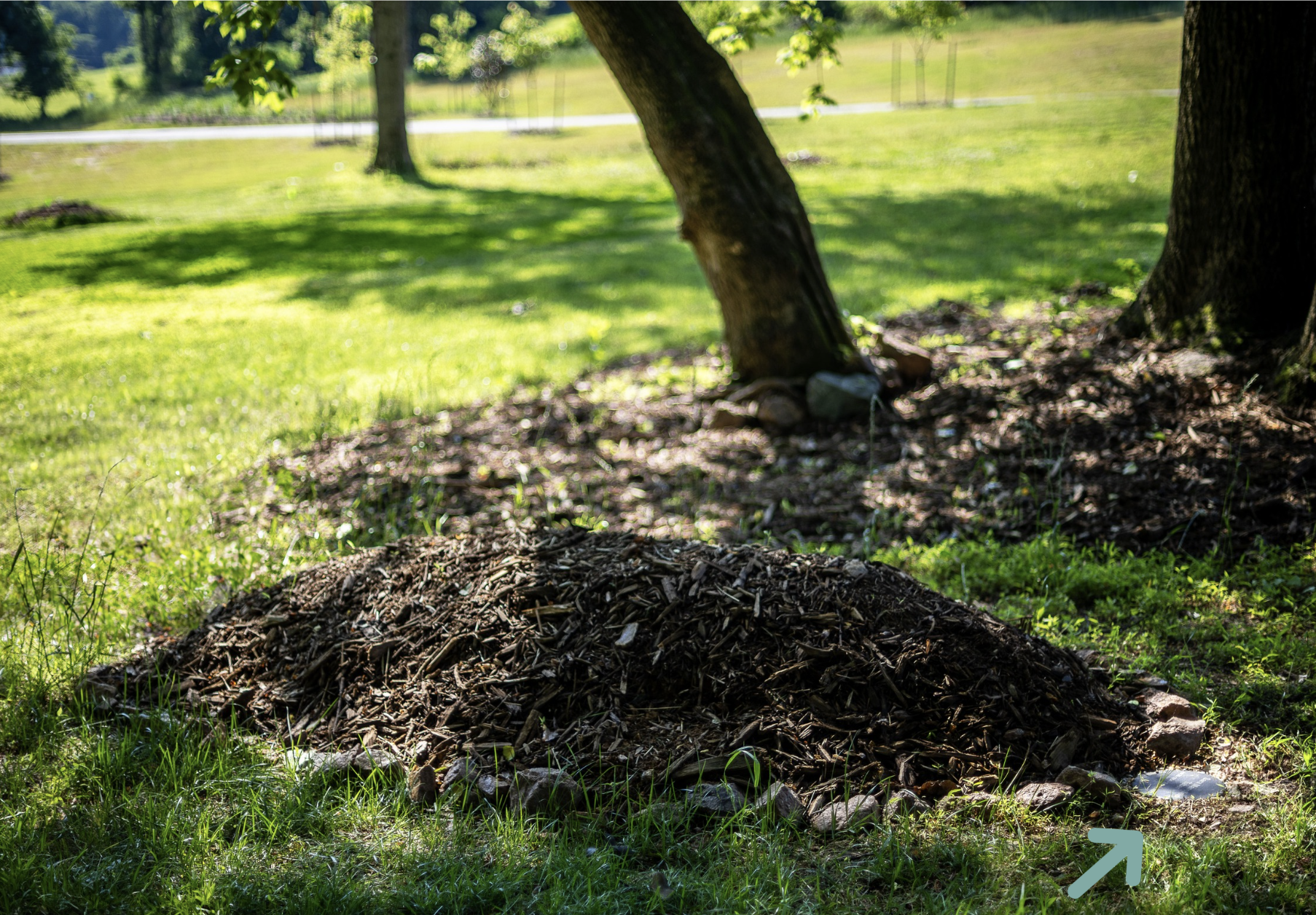
A temporary memorial marker sits at the head of a grave.
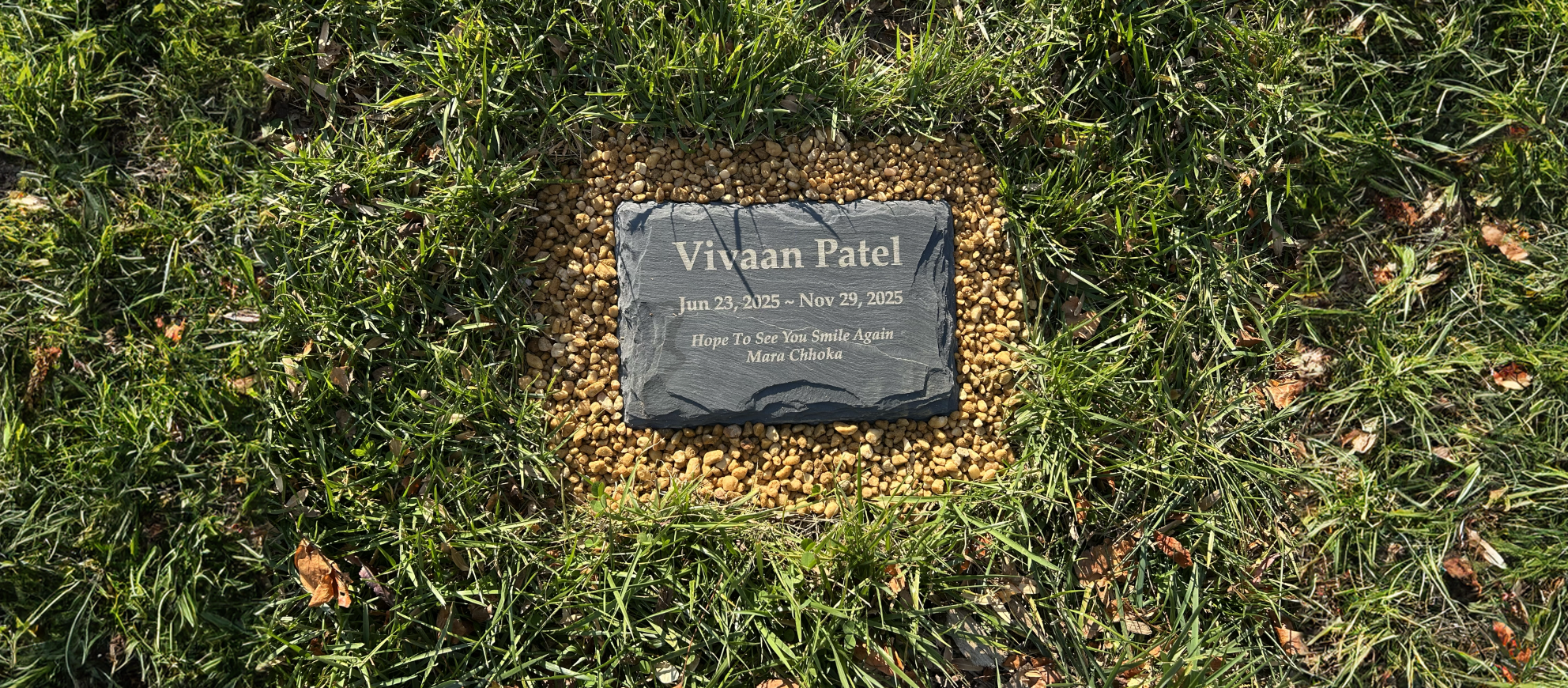
A permanent memorial marker (photo used with the family’s permission).