
Recycle Yourself: Letting Mother Nature Do the Work
At community events, our team used to display a big wooden sandwich board that read "Recycle Yourself" — a phrase we thought would capture people’s attention and start conversations about natural burial. However, we found that it sparked a different conversation from the one we expected: more and more people would stop to ask if we did "human composting" that they had been hearing about.
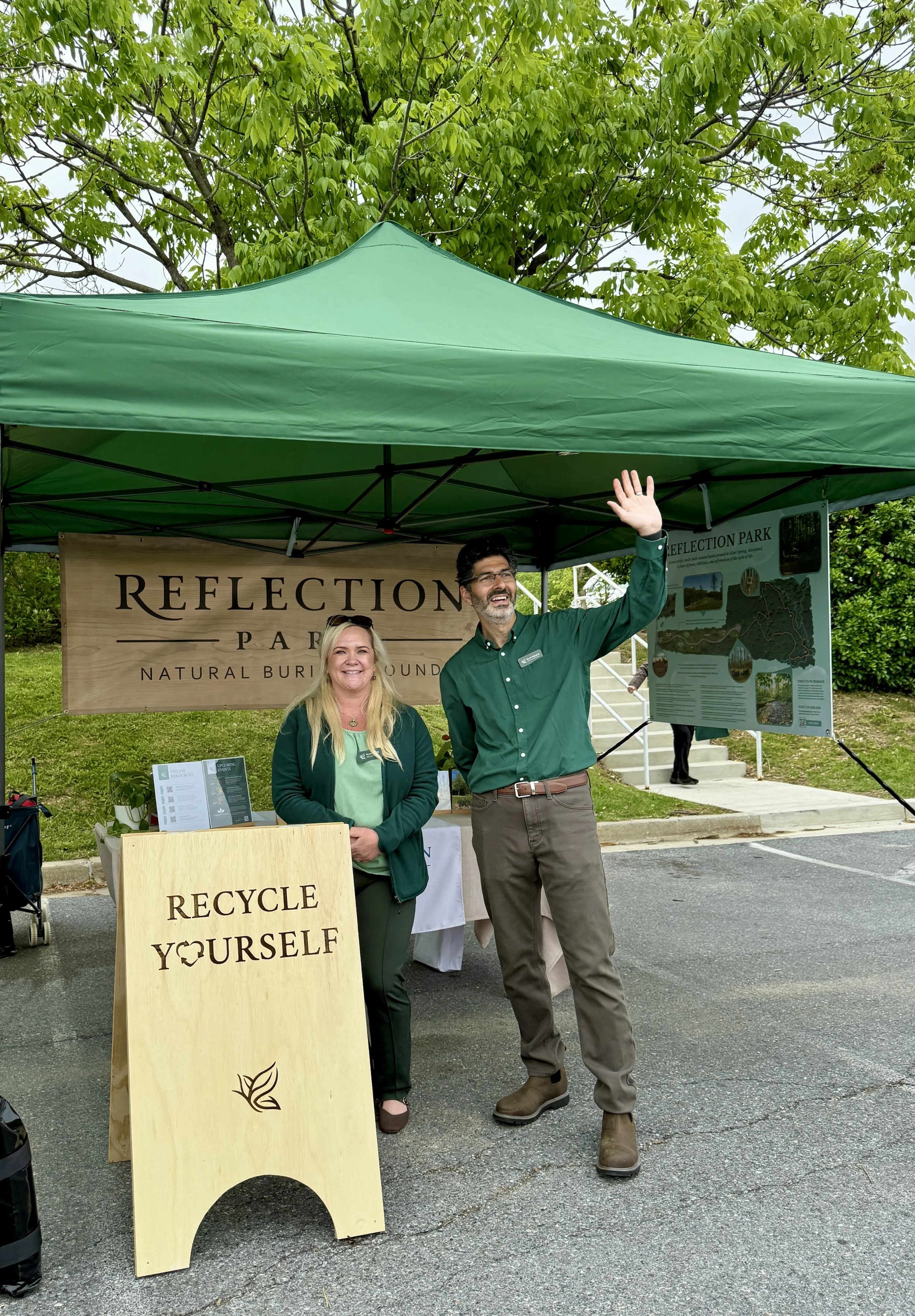
Susan and Basil at the Montgomery County GreenFest
Human composting (also called natural organic reduction) recently became a legal option in Maryland, and it has received a fair amount of media and advertising attention. We've heard from several people who are considering composting for themselves. When they do, we try to learn more about what's drawing them to composting, and we share what we know about natural burial as another option to consider. Sometimes that conversation ends with someone still leaning toward composting; sometimes it ends with planning for a natural burial. Either way, we're glad to be part of the conversation.
The interest in human composting makes sense to us. The idea of returning to the earth resonates with a lot of people, and we're glad it does. It's also a good moment to talk about how human composting and natural burial relate to each other because while they share some values, they are different.
Human composting involves placing the body in a human-made vessel within an enclosed facility along with natural materials like wood chips and alfalfa. Over a period of several months, the body decomposes. After further processing, the compost product is intended to be spread outdoors. Human composting arose to offer a more environmentally friendly alternative to flame cremation. It may also be a choice for environmentally-minded individuals in locations where natural burial is inaccessible.
Natural burial is a time-honored practice of returning the body to the earth in a way that is simple, beautiful, and environmentally sustainable. It returns to the earth what came from the earth, and leaves out what harms or doesn’t belong in the earth. Some of our peer organizations have pointed out that natural burial is likely the more environmentally friendly option, and the evidence we've seen supports that conclusion. Natural burial protects land from being developed for other purposes. As populations grow and communities devote more land to meet residential and commercial demands, natural spaces will continue to be a threatened resource. Natural burial protects this precious resource in perpetuity.
Natural burial is a practice with deep roots in human history and living cultures worldwide that offers a distinct opportunity for connection with the person who has died. People who take part in natural burial services often find it meaningful and comforting, sometimes in ways they didn't expect. In addition, natural burial offers time surrounded by nature, which carries its own well-documented benefits for the people who experience it.
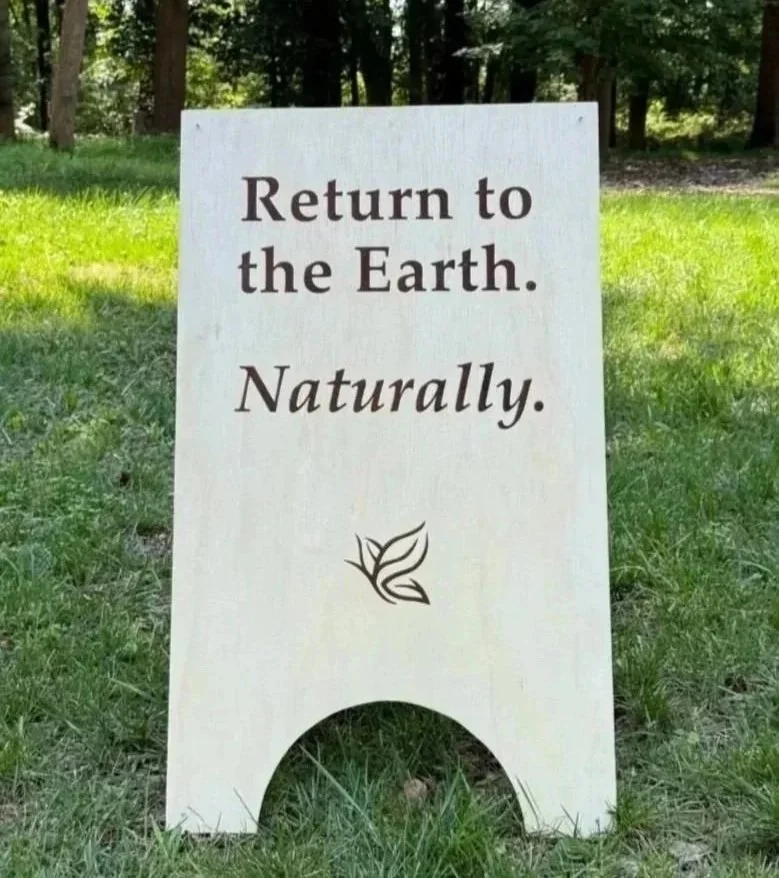
Reflection Park does indeed offer an opportunity to recycle yourself – with nature doing all the work – in simplicity, natural beauty, and an unhurried return to the earth. This is why we are now using a new sandwich board. It’s a quieter message than before, but we think it says exactly what we mean.
At Reflection Park, our role is to help people understand what natural burial is, how it differs from composting and other options, and to make natural burial more accessible to those who choose it. We invite you to learn about your options and decide what feels right for you and the people you love.